Sustainability, Compliance and the Push Toward Cleaner Packaging
Written by: David Griffin, Vice President, Global Sales and Products at Selig Group To find out more, visit Selig Group at PackExpo Chicago 2026, West Hall — W-42022
As sustainability and regulatory pressures reshape packaging decisions around the world, David Griffin, Vice President, Global Sales and Products at Selig Group, looks at what the latest developments mean for manufacturers and brand owners. While the EU’s Packaging and Packaging Waste Regulation (PPWR) is driving significant change in Europe, its influence extends well beyond the region. For US companies operating across international markets, supplying global brands and looking to future-proof packaging formats, European requirements have an obvious impact on research and development expectations around recyclability, material choices and chemical content.
Packaging professionals arriving at PackExpo Chicago this year will find sustainability sitting behind almost every conversation on the show floor. Regulatory deadlines are colliding with material innovation, and brand owners are being asked to justify decisions that used to draw little scrutiny, down to components as small as a container liner.
The PPWR deadline arrives
Food contact packaging entering the EU market falls under the Packaging and Packaging Waste Regulation (PPWR, Regulation (EU) 2025/40) from 12 August 2026. The regulation requires mandatory recyclability by 2030, sets minimum recycled content thresholds for plastic packaging, and introduces packaging reduction requirements across categories which have been unexamined for a long time.
The average European generated 178kg of packaging waste in 2023, and that figure could rise a further 19% by 2030 against 2018 levels without intervention, according to the European Commission. US producers are watching a comparable trend. The Environmental Protection Agency’s most recent full dataset, from 2018, puts containers and packaging at 82.2 million tons or 228kg per person – more than a quarter of all municipal solid waste generated that year. Whether a company sells into Europe, North America or both, packaging waste has moved from a compliance footnote to a live commercial issue.

Producers are responding by cutting packaging weight and simplifying material choices, and mono-material formats are gaining traction as one of the more practical routes through the regulation. Complex laminates and mixed plastics draw the closest scrutiny, since most recycling facilities still can’t separate their layers into usable streams. Few of these changes come down to a simple swap. Most demand a rethink of the specification itself.
Producers are responding by cutting packaging weight and simplifying material choices, with mono-material formats gaining traction as one practical route towards greater recyclability. This is not solely a European consideration: in the US, the Environmental Protection Agency (EPA) has highlighted complex packaging as a source of contamination in material recovery facilities, reflecting wider challenges around the ability of existing recycling infrastructure to handle today’s increasingly complex waste streams. Few of these changes come down to a simple material swap; most demand a rethink of the specification itself.
Tackling PFAS and total fluorine testing
Alongside recyclability, the PPWR introduces strict restrictions on PFAS, the so-called forever chemicals long used in food packaging for their resistance to grease, oil and water. The regulation sets thresholds of 50 parts per billion (ppb) for any individual PFAS measured via targeted analysis, 250 ppb for the total sum of PFAS, and 50 parts per million (ppm) when polymeric PFAS are included in broader screening methods.
Meeting these thresholds is proving more complicated than it first appears. The PPWR relies heavily on total fluorine (TF) testing as its primary screening method, but TF testing cannot distinguish between different types of PFAS, nor can it reveal whether a substance is polymeric and largely inert or mobile and capable of migrating into food. A packaging format containing trace levels of stable fluoropolymers could fail a TF test, while a format with lower but more mobile PFAS levels might pass. The 50 ppm threshold for individual PFAS also sits close to the edge of what current testing methods can reliably quantify given the complexity of different packaging materials.
Many manufacturers are now combining total fluorine screening with more detailed targeted PFAS analysis wherever elevated readings appear, giving a fuller picture of migration risk and compliance. Selig has been expanding its liner and foam portfolio to include options where PFAS are not intentionally added, and its technical teams are working with customers to manage material changeovers without disrupting production.
Liners, PCR content and the sustainability push
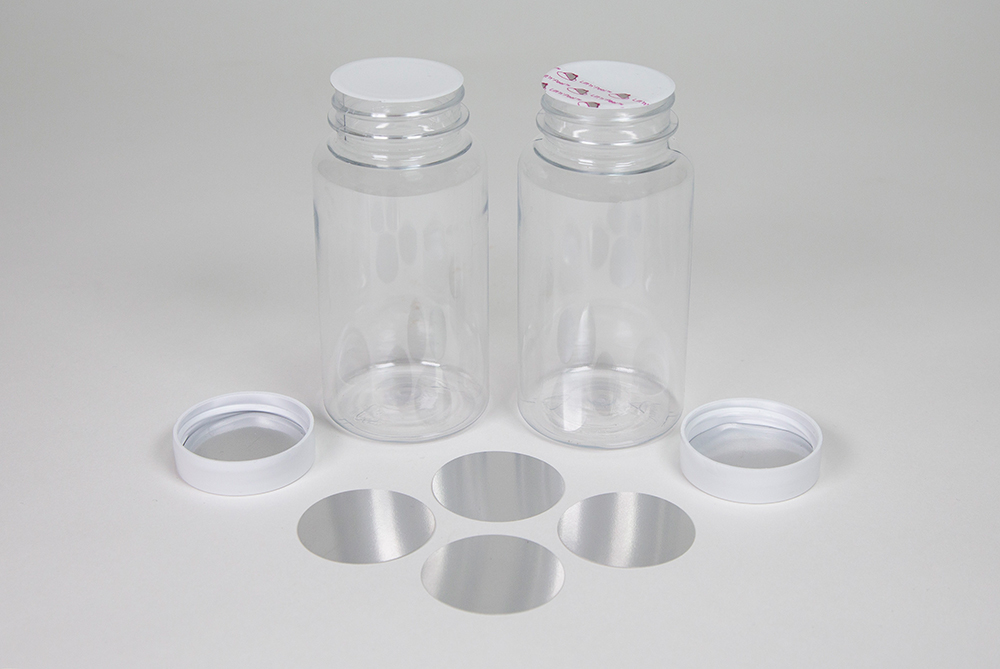
Liners and other minor components have a bigger role in compliance than their size suggests. They support a clean recycling stream, help brand owners meet lightweighting goals and maintain the durability containers need in transport and on shelf.
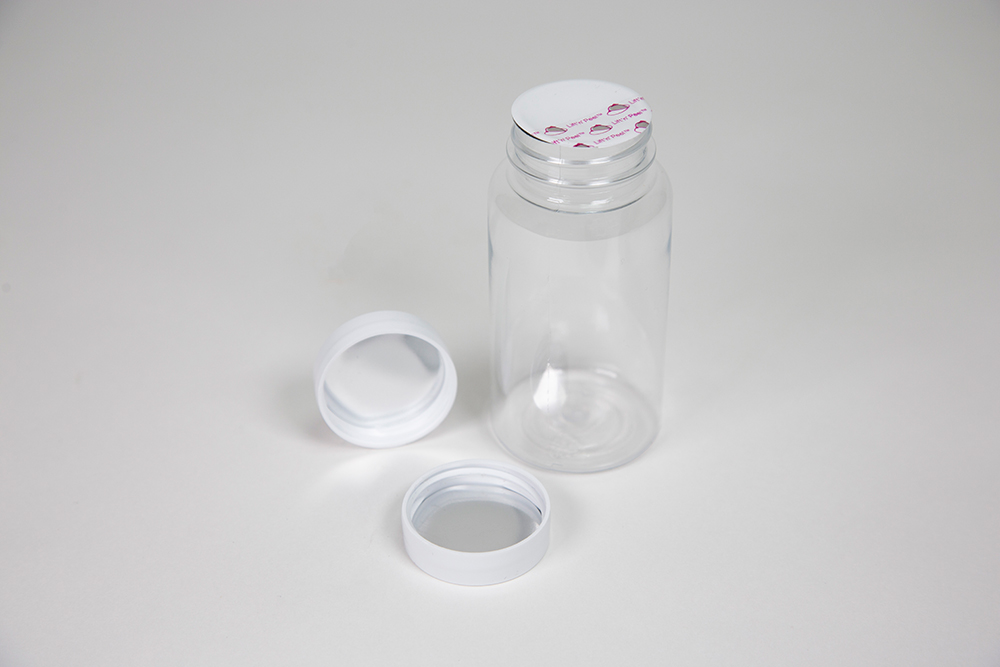
Selig recently completed the world’s first successful pilot of an aluminium-free induction liner, which delivers the same sealing performance as existing induction heat seal liners while remaining recyclable in curbside recycling schemes. The liner has been trialed with PET containers and is now being tested with PE containers and dispensing and child-resistant closures. Beyond helping brand owners meet non-recyclable packaging material targets, it allows cap manufacturers to divert skeleton waste to recycling streams instead of landfill.
Post-consumer recycled content offers another route to the same goal. Selig’s foam-based liners contain up to 15% PCR by total weight, while our PCR induction heat seal liner uses a heat seal film made from 70% PCR and a PET film with 90% PCR – these meet current FDA and EU food contact requirements. The functionality remains consistent with traditional liners, so producers can make the switch without reworking their production lines.
As the deadline approaches and PFAS-free claims come under greater scrutiny, sustainability is a thread running through every material decision food and drink producers make. Selig will be discussing these challenges, and the solutions it’s developing to meet them, at PackExpo Chicago this year.
For more information on Selig’s global capabilities and solutions, visit www.seliggroup.com, and for further information, contact: marketing@seliggroup.com.