Building Resilient Operations
5 Expert Tips for Vertical Lifting Solutions in Modern Facilities By Dan Hext, National Sales Director, PFlow Industries
Across modern industrial facilities, resilience has become a defining operational requirement. Labor constraints, evolving safety and compliance expectations, increasing automation, and pressure to scale output without expanding footprint all place new demands on how materials move through buildings. In this context, vertical material movement is no longer a secondary design consideration. It is a core determinant of whether a facility can adapt, grow, and remain efficient over time.
Vertical reciprocating conveyors (VRCs) play a critical role in this shift. When specified and integrated thoughtfully, they support safe, efficient, and future ready operations across a wide range of demanding environments. The following principles outline how vertical lifting solutions can be used to build operational resilience for both current needs and the full lifecycle of a facility.
- Evaluating Load, Speed, and Duty Cycles with a Future Focused Lens
The foundation of any resilient vertical lifting strategy is an honest assessment of what must be moved today and what may need to be moved tomorrow. Many facilities make the mistake of sizing vertical lifts around current loads alone, without accounting for changes in product mix, packaging formats, equipment upgrades, or throughput expectations. Over time, this narrow view can turn a once adequate lift into a bottleneck.
Resilient facilities approach load evaluation as a dynamic exercise. This includes understanding not only maximum weights, but also load geometry, palletization patterns, and how frequently materials must move between levels. In high growth or mission critical environments, it is common for loads to become heavier or more concentrated as equipment evolves or automation is introduced. Designing a vertical lift with sufficient capacity and carriage size from the outset allows operations to absorb these changes without structural modification.
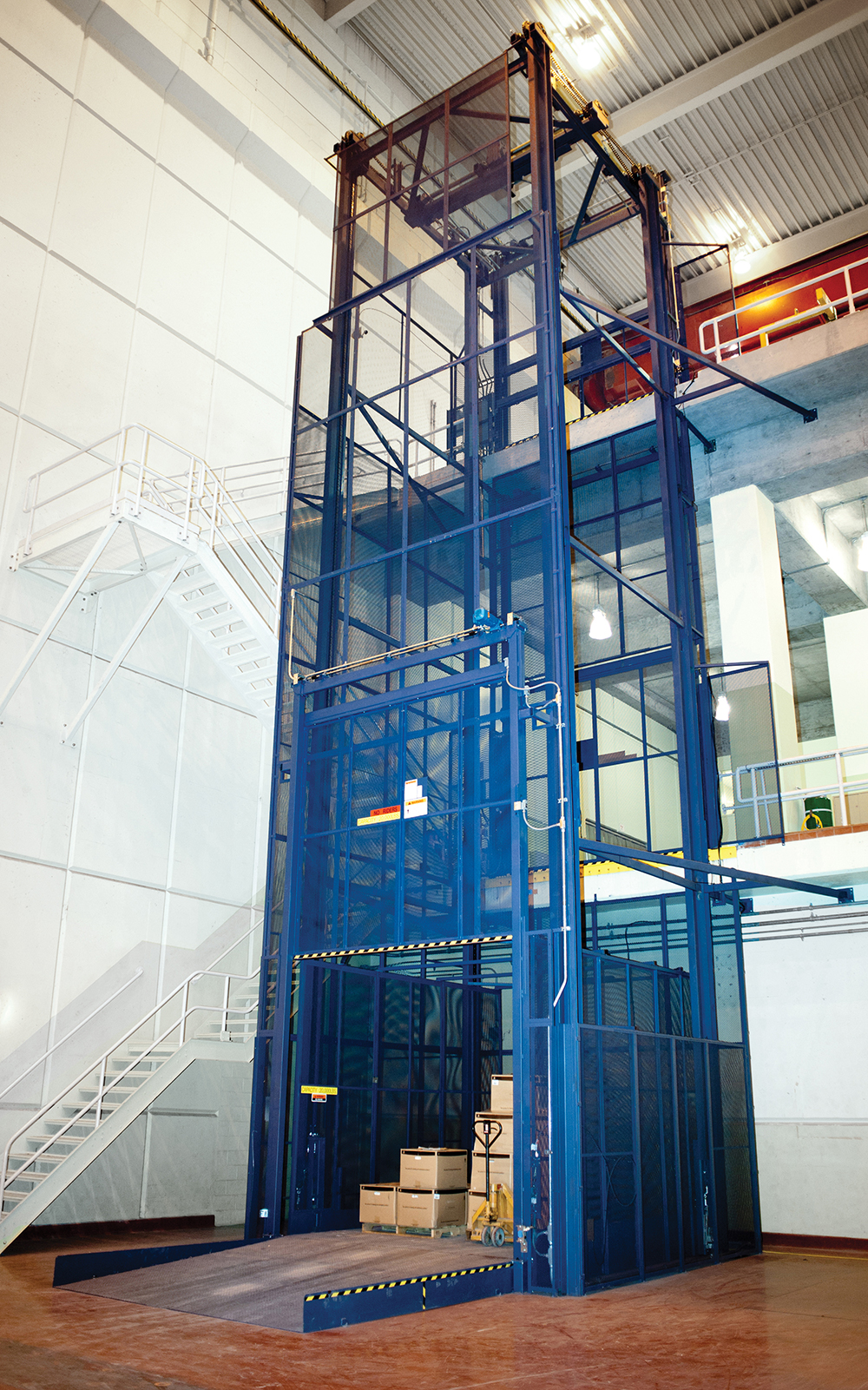
High capacity vertical lifting systems support the rapid, controlled movement of heavy loads, making them ideal for demanding, high throughput applications.
Speed and duty cycle are equally important. A lift that can carry the right weight but cannot keep pace with production schedules undermines throughput and increases reliance on manual workarounds. Facilities that operate continuously or at high cycle rates benefit from vertical lifting equipment designed for continuous duty, capable of running around the clock without forced rest periods. Taken together, capacity, speed, and duty cycle form the baseline for resilience, ensuring vertical movement remains aligned with operational reality as demands increase.
- Prioritizing Safety and Compliance as Structural Design Elements
Safety and compliance are often discussed as regulatory obligations, but in resilient facilities they are treated as structural design elements that shape how equipment is selected and deployed. Vertical lifting solutions must comply with established safety standards, but they must also align with the practical realities of how operators interact with equipment on a daily basis.
VRCs are governed by ASME B20.1 conveyor safety standards rather than elevator codes, and this distinction has meaningful implications for design, installation, and long term operation. Facilities that understand and plan around these requirements early avoid costly delays during inspection and commissioning. More importantly, they create safer working environments by ensuring that guarding, gates, interlocks, and control logic are integral to the system rather than added later.
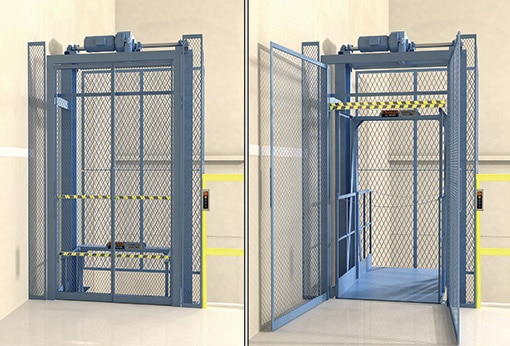
Fully enclosed vertical lifting systems protect personnel and support compliance by controlling access to moving equipment and maintaining safe, predictable material flow.
From an operational standpoint, resilient designs seek to minimize unnecessary human interaction with vertical movement. Automated gates, controlled loading zones, and clearly defined access points reduce exposure to risk while improving consistency. In regulated or multi-state operations, designing for compliance across jurisdictions further reduces long term risk, ensuring that equipment remains acceptable even as facilities expand or regulations evolve.
- Integrating Vertical Lifting Solutions into Automation and Facility Layout
Resilience depends not only on individual equipment performance, but on how well systems work together. Vertical lifting solutions are most effective when they are fully integrated into the facility’s material flow, automation strategy, and physical layout. Treating a VRC as an isolated component limits its value and often introduces inefficiencies.
Early specification is critical. When vertical lifts are planned alongside conveyors, mezzanines, and automated systems, engineers can align lift placement with natural traffic patterns and production flows. This reduces congestion, shortens travel distances, and simplifies control logic. In many projects, VRCs installed early can even be used during construction, supporting material movement before a facility is fully built out.
Automation integration further strengthens resilience. VRCs that interface seamlessly with horizontal conveyors, PLCs, and warehouse or manufacturing control systems allow materials to move between levels with minimal manual intervention. This improves throughput while also reducing dependence on scarce labor and lowers the risk of process variability. As automation strategies evolve, vertically integrated systems provide a stable backbone that supports incremental upgrades rather than wholesale redesigns.
- Addressing Hygiene, Contamination Control, and Environmental Demands
In many resilient markets, environmental conditions are as influential as mechanical requirements. Food processing, pharmaceutical manufacturing, and semiconductor production all impose strict expectations around cleanliness, contamination control, and material protection. Vertical lifting solutions must be designed to support these conditions without sacrificing reliability or uptime.
Material selection and finish play a central role. Smooth surfaces, corrosion resistant coatings, and stainless steel components reduce areas where debris can accumulate and simplify cleaning procedures. In washdown environments, equipment must withstand frequent exposure to water and chemicals without degrading seals or mechanical performance. The use of food grade lubricants and enclosed components further protects both product integrity and equipment longevity.
Beyond hygiene, environmental sensitivity also includes how materials are handled during movement. Controlled acceleration and deceleration reduce shock and vibration, protecting delicate or high value items. By tailoring vertical lift design to environmental realities, facilities ensure that vertical movement supports, rather than compromises, quality, compliance, and yield.
- Planning for Long Term ROI, Adaptability, and Minimal Downtime
Resilient operations are built with an understanding that vertical lifting solutions are long term infrastructure investments. As facilities evolve, the ability to maintain uptime, adapt performance, and avoid premature replacement becomes a defining advantage. This is where design philosophy and manufacturer expertise converge.
Rather than treating vertical lifts as fixed function equipment, resilient designs allow for performance adjustments over time. Speed increases, control upgrades, and integration with new automation layers can often be implemented without replacing the entire system. Support over the lifecycle of the equipment is equally important. Facilities benefit from vertical lifting solutions that are designed to be serviced, upgraded, and maintained without prolonged downtime. Structural durability, combined with accessible components and responsive support, protects both operational continuity and long term return on investment.
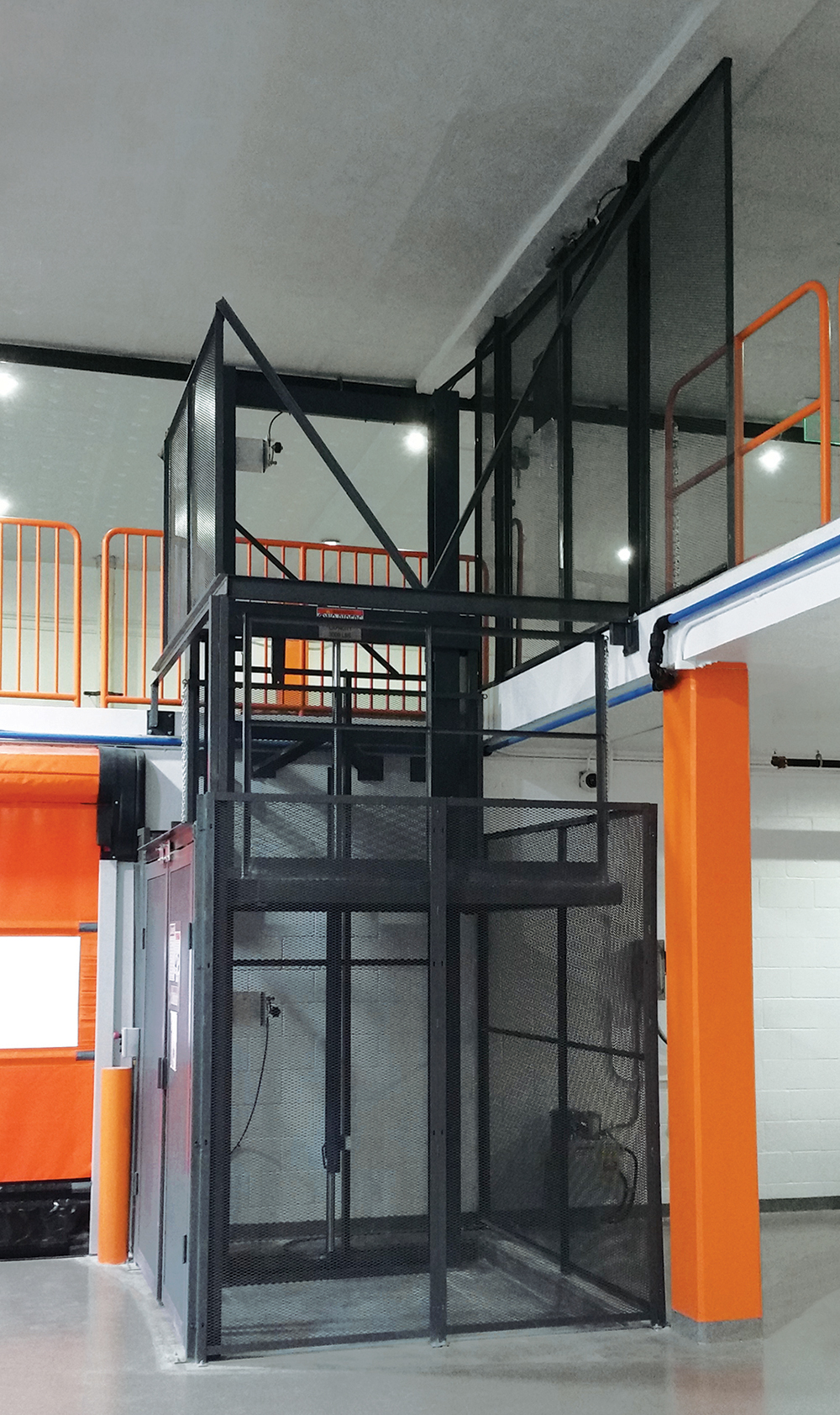
Vertical lifting solutions enable facilities to expand storage and operations into mezzanine levels, safely accommodating heavier items while maximizing usable space without increasing footprint.
Food Processing and Manufacturing
Food processing and manufacturing facilities place unique demands on vertical lifting solutions, where hygiene, throughput, and safety intersect daily. Vertical material movement must support frequent cleaning, resist corrosion, and reduce the risk of cross contamination, all while keeping products moving efficiently between levels. VRCs configured with washdown ready finishes, smooth surfaces, and food-grade components help maintain sanitary conditions without sacrificing durability. Just as importantly, vertical lifts reduce forklift traffic in production areas, improving worker safety and supporting more predictable material flow. In high volume food operations, vertical lifting becomes a stabilizing element, helping to sustain cleanliness, compliance, and throughput even as production schedules intensify.
Aligning with Resilient Vertical Design
Taken together, these five principles show that resilient vertical lifting is less about selecting a single piece of equipment and more about adopting a long-term design philosophy. Facilities that succeed over decades treat vertical movement as core infrastructure, engineered from the outset to support growth, compliance, automation, and uptime.
PFlow Industries, the founder of the VRC industry, builds vertical reciprocating conveyors specifically around this resilience framework. Their systems are designed with future-focused load evaluation, enabling facilities to plan for heavier loads, higher throughput, and changing material profiles without structural redesign. Continuous-duty capability and adjustable performance parameters help support demanding duty cycles while preserving a path for speed or control upgrades as operations evolve.
Safety and compliance are embedded as structural design elements rather than afterthoughts. With deep involvement in the development of ASME B20.1 conveyor safety standards and a long track record of multi-jurisdictional code compliance, PFlow VRCs are engineered to meet requirements across industries and locations, reducing risk during installation, inspection, and long-term operation.
From an integration standpoint, PFlow systems are built to function as part of larger material handling ecosystems, not as standalone lifts. Compatibility with conveyors, PLC controls, WMS or MES platforms, and automated workflows allows vertical lifting to support labor efficiency and automation strategies without adding complexity. This integration mindset extends into environmental considerations, with configuration options that support hygienic design, washdown environments, and controlled movement for sensitive or high-value products.
Resilient operations are built by aligning engineering decisions with long-term operational realities. When vertical lifting solutions are specified with foresight, balancing capacity, safety, integration, environmental demands, and lifecycle performance, they become enablers of growth rather than constraints. In modern facilities, resilience is not only designed into processes; it is designed into the vertical path that connects them.

About the Author
Dan Hext – National Sales Director – PFlow Industries
Dan leverages over 25 years in material handling to help craft custom equipment solutions for PFlow’s customers that streamline workflows, safeguard employees, and boost operational efficiency.
Since its founding in 1977, PFlow Industries has led the vertical conveyor industry through superior and innovative engineering by helping shape safety and regulatory codes governing VRCs, and through its focus on custom solutions for material lifting requirements.